Vacuum Excavation vs Traditional Excavation: What’s the Difference?
If you need to dig near existing pipes, cables or other buried services, the way you excavate matters. Traditional machinery can move large amounts of soil quickly, but mechanical digging can be risky when buried services are close to where you are working.
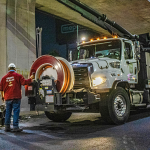
Vacuum excavation takes a different approach. High-pressure water loosens the soil and vacuum equipment removes it, allowing buried services to be exposed more carefully. Clarence Valley Septics provides vacuum excavation services for projects where greater precision is needed.
Traditional Excavation Has Its Place
Traditional excavation uses machinery such as excavators and backhoes to break up and remove soil. For larger earthmoving jobs, open areas and straightforward digging, it remains an efficient and practical option.
The challenge is knowing what is beneath the ground. Even if you know a pipe or cable is somewhere in the area, you may not know its exact location or depth. A mechanical excavator cannot see a buried service before its bucket reaches it.
When Precision Matters
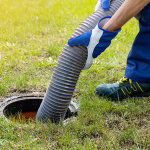
Vacuum excavation is well suited to situations where you need to uncover a specific area rather than simply remove as much soil as possible. High-pressure water breaks up the ground, while the vacuum draws the loosened material into a collection tank.
This makes it possible to expose a pipe or cable carefully and establish its position before further work takes place. The approach is commonly described as non-destructive digging because it provides greater control around existing services than conventional mechanical excavation.
It can be especially valuable during the early stages of a project, when you need to confirm what is underground before more extensive work begins.
Working Around Pipes, Cables and Other Infrastructure
Buried services can be found almost anywhere work is taking place. Water and sewer pipes, electrical cables, telecommunications lines and stormwater systems may all run beneath a site, sometimes close together.
Where the position of a service is uncertain, vacuum excavation allows the surrounding soil to be removed more carefully. This can be particularly helpful when several services are close together or there is limited space for conventional excavation equipment.
It can also help where an existing service needs to remain undisturbed while construction or maintenance work takes place nearby.
Reducing the Risk of Service Damage
Damaging a buried service can have serious consequences. A broken pipe or cable can interrupt essential services, create risks for people on site and lead to unexpected repair costs and delays.
Before digging begins, it is important to know what is beneath the work area. Clarence Valley Septics also provides cable location and electronic detection services to help locate buried utilities.
Combining accurate service locating with careful excavation gives you a clearer picture of what is underground and can reduce the risk of damaging existing infrastructure.
When Vacuum Excavation Makes Sense
Vacuum excavation is worth considering when the main challenge is not simply moving soil, but finding or working around something that is already there.
It can be a practical choice when you need to:
- Expose a pipe or cable before construction work
- Confirm the location and depth of an existing service
- Work where several services are close together
- Dig in a confined space where unnecessary disturbance needs to be minimised
Traditional excavation may still be the better option when large amounts of soil need to be moved and buried services are not an issue. Some projects may use both methods, with vacuum excavation used where greater care is needed and conventional machinery used for larger areas.
Choosing the Right Approach for Your Site
The right method depends on the specific job and the site itself. Consider what is beneath the ground, how close it is to the proposed work, how much material needs to be removed and how much room there is for equipment.
If the location of a pipe or cable needs to be confirmed, or machinery will be working close to existing services, vacuum excavation can provide a safer and more precise way to expose the area.
For straightforward bulk excavation in an open area, conventional machinery may be more appropriate. Using both methods can also make sense when a project involves precise work around services as well as larger-scale soil removal.
Clarence Valley Septics uses specialised equipment for vacuum excavation projects involving underground utilities and infrastructure.
Discuss Your Excavation Requirements
If you are planning work near buried services and are unsure which approach is suitable, Clarence Valley Septics can help you work out what is needed for your project.
Our vacuum excavation and cable location services are available across Clarence, Coffs Harbour, Grafton, Maclean and Yamba, as well as surrounding Northern NSW areas.
Call us on 6645 3100 to discuss your project and find out whether vacuum excavation could be the right option for your site.